xomoxcc/somestuff
6.0K
xomoxcc/somestuff repository overview


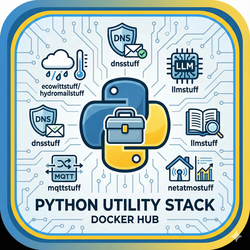
somestuff
Various small but useful Python utilities, experiments, and scripts collected in one place. Some are stand‑alone command‑line tools, others are small libraries or demo apps. A Docker image is provided to bundle the collection for easy, reproducible execution on multiple CPU architectures.
Quick links:
- Project Docker image: built from the repo‑root
Dockerfileand published via multi‑arch builds - CI: mypy + pytest, and a multi‑arch Docker build/push workflow (see badges above)
Contents overview (Python packages/modules):
dinogame: pathfinding/visualization playground inspired by “The Farmer Was Replaced”dnsstuff: SPF resolution helper and ipset updater for allow‑listing email senders (e.g. pcbway.com)ecowittstuff: simple client/types for Ecowitt weather station APIgcalstuff: CLI tool for creating Google Calendar events with day‑view confirmationhydromailstuff: assemble and send "hydro"/weather summary emails, pulling data from MQTT/Netatmok3shelperstuff: K3s kubeconfig credential synchronization utilityllmstuff: helpers for working with LLM APIs and local OCRmqttstuff: tiny MQTT wrapper utilitydhcpstuff: DHCP discover tool and diagnostic script for unwanted DHCP on Linuxnetatmostuff: Netatmo data fetch helper and deployment examplesipstuff: SIP caller — phone calls with WAV playback or piper TTS via PJSUA2, with silence detection, call recording, and speech-to-text transcription via faster-whisperucmstuff: monitor and control a Grandstream UCM6204 IP‑PBX — real‑time call events over WebSocket plus request/response control via the HTTPS API- Root helpers:
Helper.py, configs (config.yaml,config.py, optionalconfig.local.yaml), scripts - External packages:
mqttstuffandreputils(via PyPI)
Standalone Docker image sub‑projects (each with own Dockerfile and build.sh):
tangstuff: Tang server for LUKS/Clevis network‑bound disk encryptionmosquitto-2.1: Mosquitto 2.1 MQTT broker with dynamic securitypython314jit: Python 3.14 base image with JIT supportpython314pandasmultiarch: Python 3.14 base image with pandas (multi‑arch)nfs-subdir-external-provisioner: Kubernetes NFS provisioner (external submodule with local overlay)
Getting started
Local prerequisites:
- Python 3.14+ recommended (repo and Docker image currently use
python:3.14-slim-trixie) pipand a virtualenv of your choice
Install dependencies:
python -m venv .venv
source .venv/bin/activate
pip install -r requirements.txt -r requirements-dev.txt
Configuration:
config.yamlcontains sample/defaults. Do not commit secrets. If needed, createconfig.local.yamlto override locally (kept out of the image by default). Some modules read credentials/API keys from here (e.g. Ecowitt, Netatmo, MQTT, email settings). Adjust as needed before running modules that require it.
Run tests and type checks:
pytest -q
mypy .
Modules and their usefulness
dhcpstuff
DHCP discovery and diagnostic tools. Includes a Python DHCP Discover sender that displays all responses (including Proxy DHCP/PXE boot servers) and a bash diagnostic script for finding unwanted DHCP on physical interfaces (Ubuntu Server).
- CLI usage (requires root):
sudo python -m dhcpstuff -i eth0 -a efi64
- Flags:
-iinterface,-ttimeout,-mMAC,-aPXE architecture (bios,efi64,efi64-http). - The bash script
diagnose-dhcp.shchecks cloud-init, netplan, systemd-networkd, NetworkManager, kernel cmdline, leases, and hooks for unwanted DHCP sources. - No external dependencies (stdlib only).
- Usefulness: quickly identify all DHCP/PXE servers on a network segment, or diagnose why a Linux host is unexpectedly obtaining a DHCP lease.
dinogame
Pathfinding toy project and visualization to prototype search/planning strategies on a grid world, loosely inspired by “The Farmer Was Replaced”. Useful to experiment with A* heuristics and safe‑move constraints while visualizing planning vs execution.
- Entrypoint example:
dinogame/dinogame.pycontains amain()that renders a GIF of a planning/execution sequence. - Requirements:
matplotlib,numpy(matplotlibis commented out inrequirements.txtby default; enable it to use this module). - Run locally:
python -m dinogame.dinogame
This saves an animated GIF (via pillow) to your desktop by default; see code comments to tweak world size and frame count.
dnsstuff (spf_ipset_updater)
Script to crawl SPF records (including nested include: chains) for one or more domains, resolve them to IPv4 ranges/addresses, then update an ipset. The ipset can be used by your MTA/firewall to allowlist specific SMTP sources. Originally motivated by receiving mails from pcbway.com while using country‑based IP blocks.
- CLI usage:
python -m dnsstuff.spf_ipset_updater [--ipset-name NAME] [--ipset-type TYPE] [--dry-run] [domain ...]
- Behavior:
- Logs resolved IPv4s for each domain and combined total.
- If running as root (
UID 0), updates/swap‑refreshes the target ipset (default:smtpallowlist) usingpyroute2.ipset. - If not root, it only reports and skips the ipset update step.
- Dependencies:
dnspython,pyroute2. - Usefulness: automate building an SMTP allowlist from domains you trust, keeping it fresh even with complex SPF chains.
ecowittstuff
Small client types and functions to call the Ecowitt API and parse real‑time weather data into typed models.
- Main bits:
ecowittstuff/ecowittapi.pydefinespydanticmodels (e.g.WeatherStationResponse) andget_realtime_data(). - Config required:
ecowitt.application_key,ecowitt.api_key,ecowitt.mac, URLs inconfig.yaml. - Example:
python -c "from ecowittstuff.ecowittapi import get_realtime_data; print(get_realtime_data())"
- Usefulness: convenient, typed access to your Ecowitt station’s real‑time metrics for dashboards, alerts, and reports.
gcalstuff
CLI tool for creating Google Calendar events via OAuth2 Desktop flow. Shows all existing events for the target day across all user calendars and requires explicit confirmation before creating the new event.
- Entrypoint:
gcalstuff/gcal_event.py - Setup: download OAuth2 Desktop credentials from Google Cloud Console to
~/.config/gcal/credentials.json. On first run the browser‑based OAuth flow creates~/.config/gcal/token.json. - CLI usage:
python -m gcalstuff.gcal_event "Meeting" 2025-07-15 14:00
python -m gcalstuff.gcal_event "Lunch" 2025-07-15 12:00 -d 90 --description "Team lunch"
- Dependencies:
google-auth,google-auth-oauthlib,google-api-python-client. - Docker: the initial OAuth flow opens a browser, so run it on the host first. After that, mount
~/.config/gcalinto the container (read‑write, since the token gets refreshed). - Usefulness: quick calendar event creation from the terminal with conflict visibility.
hydromailstuff
Compose and send a status email summarizing recent measurements (e.g., water level, rain totals, ambient data). Pulls latest values from MQTT topics and Netatmo.
- Entrypoint:
hydromailstuff/hydromail.py→do_main_stuff(). - Needs config: email settings, MQTT (
mqtt.*), and Netatmo credentials undernetatmo.*inconfig.yaml. - There are example deployment/cron YAMLs in
hydromailstuff/somestuff_hydromail_cronjob.yml. - Usefulness: periodic email digests for environmental monitoring.
llmstuff
Helper utilities to interact with LLM providers or local OCR pipelines.
- Files:
llmstuff/llmhelper.py,llmbatchhelper.py,ollamadeepseekocr.py. - Config: keys under
google.*andanthropic.*inconfig.yamlif you want to call those providers. - Usefulness: quick building blocks when experimenting with LLMs and OCR.
mqttstuff
Minimal MQTT wrapper(s) and helpers.
- File:
mqttstuff/mosquittomqttwrapper.py. - Config:
mqtt.*andmqtt_topics.*inconfig.yaml(topics include metadata such as subscribe flag and default metadata). - Usefulness: standardize how topics are named and read/published across scripts.
- ⚠️ Warning: this is now an external module (https://github.com/vroomfondel/mqttstuff) and included as library via pypi (https://pypi.org/project/mqttstuff/)
netatmostuff
Read Netatmo measurements and provide a deployment example.
- Files:
netatmostuff/lnetatmo.py, deployment examplesomestuff_netatmo_deployment.yml. - Config:
netatmo.username/password/client_id/client_secret(and optional module IDs) inconfig.yaml. - Usefulness: sourcing outdoor temperature, rainfall, pressure, etc., for dashboards or mail digests.
k3shelperstuff
K3s kubeconfig credential synchronization utility. Fetches the kubeconfig from a remote K3s server via SSH, compares user credentials and cluster CA data against the local ~/.kube/config, and interactively updates any differences.
- Entrypoint:
k3shelperstuff/update_local_k3s_keys.py - CLI usage:
python -m k3shelperstuff.update_local_k3s_keys
python -m k3shelperstuff.update_local_k3s_keys -H myserver -c my-k3s-context
- Remote host and context are auto‑detected from the current‑context in the local kubeconfig if not provided.
- Docker: mount
~/.kubeinto the container (read‑write, since the script updates the local kubeconfig). The script SSHs to the remote host, so~/.sshmust also be accessible. - Usefulness: keep local kubeconfig credentials in sync with a remote K3s server after certificate rotation.
sipstuff
SIP caller module using PJSUA2. Registers with a SIP/PBX server, dials a destination, plays a WAV file or synthesizes speech via piper TTS on answer, and hangs up. Designed for headless/container operation (null audio device, no sound card required).
Features:
- Transports: UDP, TCP, TLS (with optional server certificate verification).
- SRTP: disabled, optional, or mandatory media encryption.
- TTS: piper text‑to‑speech via a bundled Python 3.12 venv (piper‑phonemize lacks 3.14 wheels). Automatic voice model download; default model
de_DE-thorsten-high. Optional ffmpeg resampling to SIP‑friendly rates (8000/16000 Hz). - Recording & STT: record remote‑party audio (
--record), transcribe via faster‑whisper (--transcribe) with Silero VAD pre‑filtering. Outputs a JSON call report with segment timestamps, audio duration, and language probability. - Silence detection:
--wait-for-silencedelays playback until the callee finishes speaking (RMS‑basedSilenceDetectoron the incoming audio stream). - NAT traversal: STUN servers, ICE, TURN relay (with auth, UDP/TCP/TLS transport), UDP keepalive interval, and static
--public-addressfor K3s/SNAT scenarios where auto‑detection returns an unreachable IP. - Playback controls:
--repeat,--pre-delay,--post-delay,--inter-delay. - Multi‑homed host support: auto‑detects the correct local IP and binds SIP + RTP transports to it, avoiding one‑way audio.
CLI usage:
# WAV playback
python -m sipstuff.cli call --server pbx.local --user 1000 --password secret \
    --dest +491234567890 --wav alert.wav

# Text-to-speech
python -m sipstuff.cli call --server pbx.local --user 1000 --password secret \
    --dest +491234567890 --text "Achtung! Wasserstand kritisch!"

# Record, transcribe, and wait for callee to finish speaking
python -m sipstuff.cli call --server pbx.local --user 1000 --password secret \
    --dest +491234567890 --wav alert.wav \
    --record /tmp/recording.wav --transcribe --wait-for-silence 1.0

# With NAT traversal and TLS transport
python -m sipstuff.cli call --server pbx.local --user 1000 --password secret \
    --dest +491234567890 --wav alert.wav \
    --transport tls --srtp mandatory \
    --stun-servers stun.l.google.com:19302 --ice
- Config: YAML file,
SIP_*environment variables, or direct CLI arguments. Priority: CLI overrides > env > YAML. - Library API:
make_sip_call()for one‑off calls,SipCallercontext manager for multiple calls,generate_wav()for standalone TTS,transcribe_wav()for standalone STT. - Dependencies:
pjsua2(PJSIP Python bindings, built from source in Docker),pydantic,ruamel.yaml,loguru. - Docker: PJSIP is compiled in a multi‑stage build (stage 1), piper‑tts is installed in a Python 3.12 venv (stage 2), and both are copied into the final image (stage 3).
- Usefulness: automated alert/notification calls from scripts, cron jobs, or monitoring systems.
ucmstuff
Monitor and control a Grandstream UCM6204 IP‑PBX from Python. The UCM exposes two independent interfaces with different session models, and this module talks to both:
- WebSocket (
/websockify): the UCM pushes real‑time events (ActiveCallStatus,ExtensionStatus,PbxStatus, …). Handled byUCMEventClient(auto‑reconnect + heartbeat), authenticated with a web user. - HTTPS API (
/api): request/response control and queries (acceptCall,refuseCall,Hangup,dialExtension, CDR, …). Handled byUCM6204, authenticated with an API user.UCM6204Restadds a named, typed method for every HTTPS‑API action (trunks, routes, IVRs, queues, paging, accounts, users, dialing/transfer, …).
To both monitor and control calls you run both clients together (the "coordinated" setup); TrunkCallRouter / IncomingCall route incoming calls on a trunk to a caller‑based branch.
- Files:
ucmstuff/ucm6204_api.py(core + Typer CLI +/healthzserver for K8s probes),ucm6204_api_rest.py(full typed API),example_router.py. - CLI usage (repeatable
--trunk; omit for monitor‑only):
python -m ucmstuff.ucm6204_api \
  --host ucm.example.lan --port 8089 \
  --web-user webuser --web-password '…' \
  --api-user cdrapi   --api-password '…' \
  --trunk MyTrunk
- Dependencies:
requests,typer,websocket-client. - Deployment:
somestuff_ucm6204_deployment.yml— one pod = events + control, outbound‑only to the UCM (no service/ingress),/healthzon port 8070 backs the liveness/readiness probes. Config with real credentials goes in*.local.*(gitignored); commit only the.examplevariants. - Note: both interfaces negotiate a weak Diffie‑Hellman group, so the clients lower the OpenSSL security level (
@SECLEVEL=1) automatically. Real‑time events use the WebSocket model — theurlreport‑push parameter in Grandstream's older PDF guide is a dead legacy field on current firmware. - Usefulness: build call‑routing / screening / monitoring automation on top of a UCM6204 (e.g. auto‑accept known callers, refuse spam, react to PBX status).
flickrdownloaderstuff (moved)
The Flickr photo backup functionality has been moved to a standalone repository: github.com/vroomfondel/flickrtoimmich
The Docker image is still available at Docker Hub: xomoxcc/flickr-download.
Root helpers and configuration
Helper.py: JSON helpers including aComplexEncoderto serialize datetimes, UUIDs, and custom objects withrepr_json()/as_string().config.py: config loader/merger; useconfig.local.yamlto keep secrets out of VCS and override defaults.scripts/update_badge.py: helper used in CI to update the clones badge.tests/: basic test scaffold.
Docker: build process, use, and usefulness
There is a single Docker image defined by the repo‑root Dockerfile. It uses a three‑stage multi‑stage build:
- Stage 1 — PJSIP builder (
python:3.14-slim-trixie): compiles PJSIP 2.16 with Python bindings (pjsua2) and stages the shared libraries. - Stage 2 — piper builder (
python:3.12-slim-trixie): creates a self‑contained Python 3.12 venv withpiper-tts(piper‑phonemize has no Python 3.14 wheels). The portable Python 3.12 runtime and venv are copied into the final image at/opt/python312and/opt/piper-venv. - Stage 3 — Final image (
python:3.14-slim-trixie):- Installs system tools (
htop,dnsutils,tini,ffmpeg, etc.) and audio runtime libraries (libasound2,libssl3,libopus0). - Installs Python deps via
requirements.txt. - Creates a non‑root user (
pythonuser, configurable via build argsUID,GID,UNAME). - Copies PJSIP libs + bindings from stage 1 and piper venv from stage 2.
- Copies the packages into
/appand setsPYTHONPATHaccordingly. - Accepts build‑time metadata args and exports them as envs:
GITHUB_REF,GITHUB_SHA,BUILDTIME. - Entrypoint is
tini --, defaultCMDtails the log (adjust for your workload).
- Installs system tools (
Why this is useful:
- Reproducible environment across machines/architectures.
- Non‑root execution by default improves container security.
- Multi‑arch support (amd64 + arm64) for running on laptops, servers, and SBCs alike.
Local build (simple)
docker build \
  --build-arg buildtime="$(date +'%Y-%m-%d %H:%M:%S %Z')" \
  -t xomoxcc/somestuff:python-3.14-slim-trixie \
  .
Run interactively (example):
docker run --rm -it \
  -v $(pwd)/config.yaml:/app/config.yaml:ro \
  xomoxcc/somestuff:python-3.14-slim-trixie \
  python -m dnsstuff.spf_ipset_updater pcbway.com
Local build and multi‑arch push via buildx
This repo includes a helper script build.sh that:
- Logs in (expects
DOCKER_TOKENUSERandDOCKER_TOKENin env on first run) - Ensures a
buildxbuilder exists (and installs binfmt/qemu if needed) - Builds locally and also performs a
docker buildx build --platform linux/amd64,linux/arm64 --pushwith tags - Writes local build logs to
docker_build_local.log
Usage:
./build.sh            # multi‑arch build & push
./build.sh onlylocal  # local build only (no push)
The script also sets DOCKER_CONFIG to the bundled docker-config/ directory so the builder state is isolated per‑repo. The primary tag is xomoxcc/somestuff:python-3.14-slim-trixie and an additional :latest tag is automatically added if missing.
GitHub Actions
.github/workflows/buildmultiarchandpush.ymlbuilds and pushes multi‑arch images on CI..github/workflows/mypynpytests.ymlruns mypy + pytest..github/workflows/checkblack.ymlchecks code style..github/workflows/update-clone-badge.ymlupdates the clones badge.
Standalone Docker Image Sub‑projects
Each sub‑project has its own Dockerfile, build.sh, and README.md:
python314jit
Python 3.14 base image with JIT support for experimenting with Python 3.14's new features and performance.
- Docker Hub
- See
python314jit/README.mdfor details.
python314pandasmultiarch
Python 3.14 base image with pandas pre‑installed, built for multi‑arch (amd64 + arm64).
- Docker Hub
- See
python314pandasmultiarch/README.mdfor details.
mosquitto-2.1
Mosquitto 2.1 MQTT broker with dynamic security plugin, multi‑arch build.
- Docker Hub
- See
mosquitto-2.1/README.mdfor details.
tangstuff
Tang server for LUKS/Clevis network‑bound disk encryption (NBDE), enabling automatic disk unlock on trusted networks.
- Docker Hub
- See
tangstuff/README.mdfor details.
nfs-subdir-external-provisioner
Kubernetes NFS external provisioner (git submodule from upstream). Local modifications are stored in overlays/nfs-subdir-external-provisioner/ and applied at build time.
- Build:
make build-nfs(applies overlay, then builds) - See upstream repo for documentation.
Versioning
This is a living collection; no strict semantic versioning. Expect occasional breaking changes. A rough, humorous version might be “-0.42”.
License
This project is licensed under the LGPL where applicable/possible — see LICENSE.md. Some files/parts may use other licenses: MIT | GPL | LGPL. Always check per‑file headers/comments.
Authors
- Repo owner (primary author)
- Additional attributions are noted inline in code comments
Acknowledgments
- Inspirations and snippets are referenced in code comments where appropriate.
⚠️ Note
This is a development/experimental project. For production use, review security settings, customize configurations, and test thoroughly in your environment. Provided "as is" without warranty of any kind, express or implied, including but not limited to the warranties of merchantability, fitness for a particular purpose and noninfringement. In no event shall the authors or copyright holders be liable for any claim, damages or other liability, whether in an action of contract, tort or otherwise, arising from, out of or in connection with the software or the use or other dealings in the software. Use at your own risk.
Tag summary
Content type
Image
Digest
sha256:7ba9b91ab…
Size
183.3 MB
Last updated
about 1 hour ago
docker pull xomoxcc/somestuff:python-3.14-slim-trixie