keepcoolch/dockamp
DockAMP is a web interface to manage official Apache/Nginx, PHP, MySQL/MariaDB/PostgeSQL containers.
1.7K
keepcoolch/dockamp repository overview
🐳 DockAMP Docker image or separate macOS app
DockAMP is a Docker image with a responsive web interface to manage official Apache/Nginx, PHP, MySQL/MariaDB/PostgeSQL and proxy containers in Docker - also available as a macOS app. Docker version 1.2 | macOS version 1.1 | developed by Kevin Tobler 🌐 www.kevintobler.ch
🐳 The Docker version can run on any Docker-compatible environment. The image includes support for both linux/amd64 and linux/arm64.

🍎 The macOS version supports Docker Desktop and OrbStack (macOS 14.6 Sonoma or newer)

🐳 Docker version
🚀 Main features of the Docker version
- Browser-based management interface in English and German
- Apache or Nginx for each server
- Automatic PHP version discovery with legacy PHP versions available
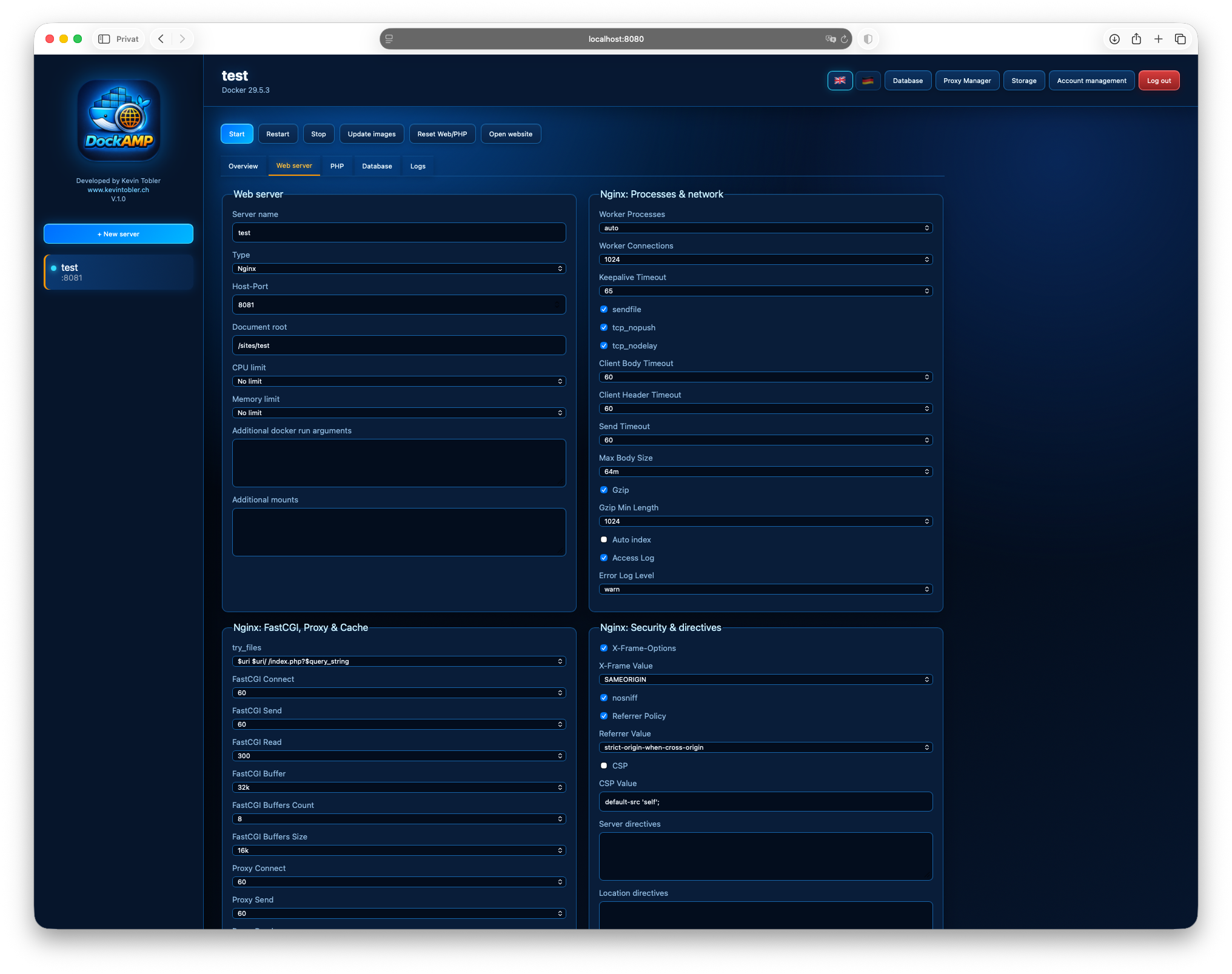
- Advanced PHP, Apache, and Nginx configuration with structured dropdowns for common values
- Apache and Nginx security header controls for X-Frame-Options, Referrer-Policy, CSP, and related directives
- MySQL, MariaDB, and PostgreSQL
- Shared global or dedicated per-server database containers
- Automatic database image and data migration checks
- Nginx Proxy Manager integration
- phpMyAdmin integration
- Adminer integration for PostgreSQL databases
- SQL dump exports
- Container logs and status overview
- Live visitor overview with active request paths and per-server traffic speed
- Automatic free web-port selection starting above DockAMP's own port
- CPU and memory limits based on the available Docker host resources
- Docker volumes or host paths for persistent storage
- Initial setup can detect and choose Docker volumes or host mounts for
/dataand/sites - Separate storage handling for DockAMP configuration and website/runtime files
- Storage migration between Docker volumes and host mounts where supported
- Host folder browser for document roots, host mounts, additional server mounts, and backup targets
- Folder creation and safer folder deletion dialogs in folder browser views
- Website file browser for document roots and additional mounts
- Upload files or whole folders directly through the browser
- Rename, copy, move, delete, and download website files or folders
- Download folders as compressed archives
- Webserver permission checks for document roots and additional mounts, with a repair action for safe read and traversal permissions
- Global image update checker for DockAMP-managed images, including DockAMP itself, web servers, PHP runtimes, database tools, proxy, Adminer, phpMyAdmin, and helper images
- DockAMP-managed unused image cleanup
- DockAMP-managed unused volume overview with individual delete actions
- User login and account management
- Automatic container restart and auto-start options
- Backup and restore support for Docker volumes and host-mounted storage paths
- Backup selection for DockAMP config, sites/runtime files, mounted web paths, dedicated databases, global database, and Proxy Manager data
- Optional restore selection per backup archive plus backup download as a compressed archive
Linux and NAS
The following command stores DockAMP configuration and website data in named Docker volumes:
docker run -d \
  --name dockamp \
  --restart unless-stopped \
  -p 8080:8080 \
  -v /var/run/docker.sock:/var/run/docker.sock \
  -v dockamp_data:/data \
  -v dockamp_sites:/sites \
  --add-host host.docker.internal:host-gateway \
  keepcoolch/dockamp:latest
When using a persistent host-mount:
docker run -d \
  --name dockamp \
  --restart unless-stopped \
  -p 8080:8080 \
  -v /var/run/docker.sock:/var/run/docker.sock \
  -v /volume1/path-to-folder/data:/data \
  -v /volume1/path-to-folder/sites:/sites \
  -e DOCKAMP_DATA_HOST_PATH=/volume1/path-to-folder/data \
  -e DOCKAMP_SITES_HOST_PATH=/volume1/path-to-folder/sites \
  --add-host host.docker.internal:host-gateway \
  keepcoolch/dockamp:latest
This is also the recommended starting point for Docker-capable NAS systems. The Docker socket may need to be selected through the NAS Docker Manager.
macOS with Docker Desktop
docker run -d \
  --name dockamp \
  --restart unless-stopped \
  -p 8080:8080 \
  -v "$HOME/.docker/run/docker.sock:/var/run/docker.sock" \
  -v dockamp_data:/data \
  -v dockamp_sites:/sites \
  --add-host host.docker.internal:host-gateway \
  keepcoolch/dockamp:latest
Host directories selected later as document roots must be shared with Docker
Desktop under Settings -> Resources -> File Sharing.
macOS with OrbStack
docker run -d \
  --name dockamp \
  --restart unless-stopped \
  -p 8080:8080 \
  -v "$HOME/.orbstack/run/docker.sock:/var/run/docker.sock" \
  -v dockamp_data:/data \
  -v dockamp_sites:/sites \
  --add-host host.docker.internal:host-gateway \
  keepcoolch/dockamp:latest
Docker Compose
Create a compose.yaml file with docker volumes:
services:
  dockamp:
    image: keepcoolch/dockamp:latest
    container_name: dockamp
    restart: unless-stopped
    ports:
      - "8080:8080"
    volumes:
      - /var/run/docker.sock:/var/run/docker.sock
      - dockamp_data:/data
      - dockamp_sites:/sites
    extra_hosts:
      - "host.docker.internal:host-gateway"

volumes:
  dockamp_data:
  dockamp_sites:
When using a persistent host-mount:
services:
  dockamp:
    image: keepcoolch/dockamp:latest
    container_name: dockamp
    restart: unless-stopped
    ports:
      - "8080:8080"
    volumes:
      - /var/run/docker.sock:/var/run/docker.sock
      - /volume1/path-to-folder/data:/data
      - /volume1/path-to-folder/sites:/sites
    environment:
      - DOCKAMP_DATA_HOST_PATH=/volume1/path-to-folder/data
      - DOCKAMP_SITES_HOST_PATH=/volume1/path-to-folder/sites
    extra_hosts:
      - "host.docker.internal:host-gateway"
Start DockAMP:
docker compose up -d
On macOS, replace /var/run/docker.sock in the Compose file with:
${HOME}/.docker/run/docker.sock
For OrbStack use:
${HOME}/.orbstack/run/docker.sock
How to open the dashboard:
After startup, open:
http://localhost:8080
On a remote server or NAS, replace localhost with the IP address or hostname of the Docker host. The first visit opens the administrator account setup.
Using host directories
Individual server document roots can also point to absolute paths on the Docker host. Those paths must be accessible to the Docker daemon.
DockAMP includes a host folder browser for supported Docker environments. It can help select document roots, storage paths, and additional mounts from host paths that are visible to the Docker daemon.
Persistent data
/data: DockAMP configuration, users, sessions, and application state/sites: website files and generated runtime configuration- Database and Proxy Manager data: separate named volumes by default
During the first setup, DockAMP shows the detected storage method for /data and /sites and lets you keep Docker volumes or switch to host mounts. The same storage areas can also be adjusted later from the Storage page.
Updates
You can update DockAMP directly from the dashboard, so there's no need to run manual update commands in the terminal.
Notes
Important
DockAMP requires access to the Docker socket because it creates and manages other containers. Access to `docker.sock` effectively grants Docker host administration privileges. Only expose DockAMP on trusted networks and use a strong administrator password.
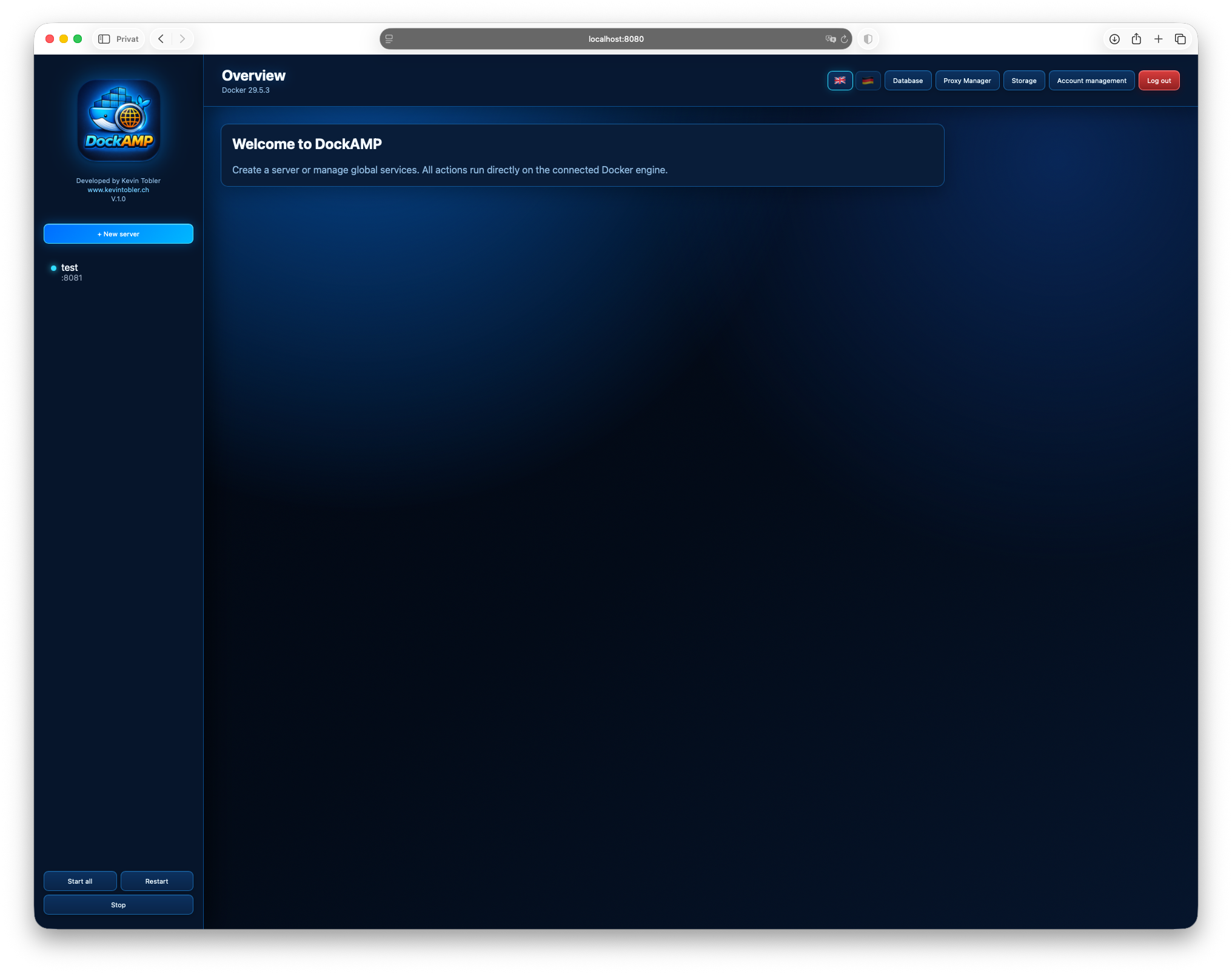
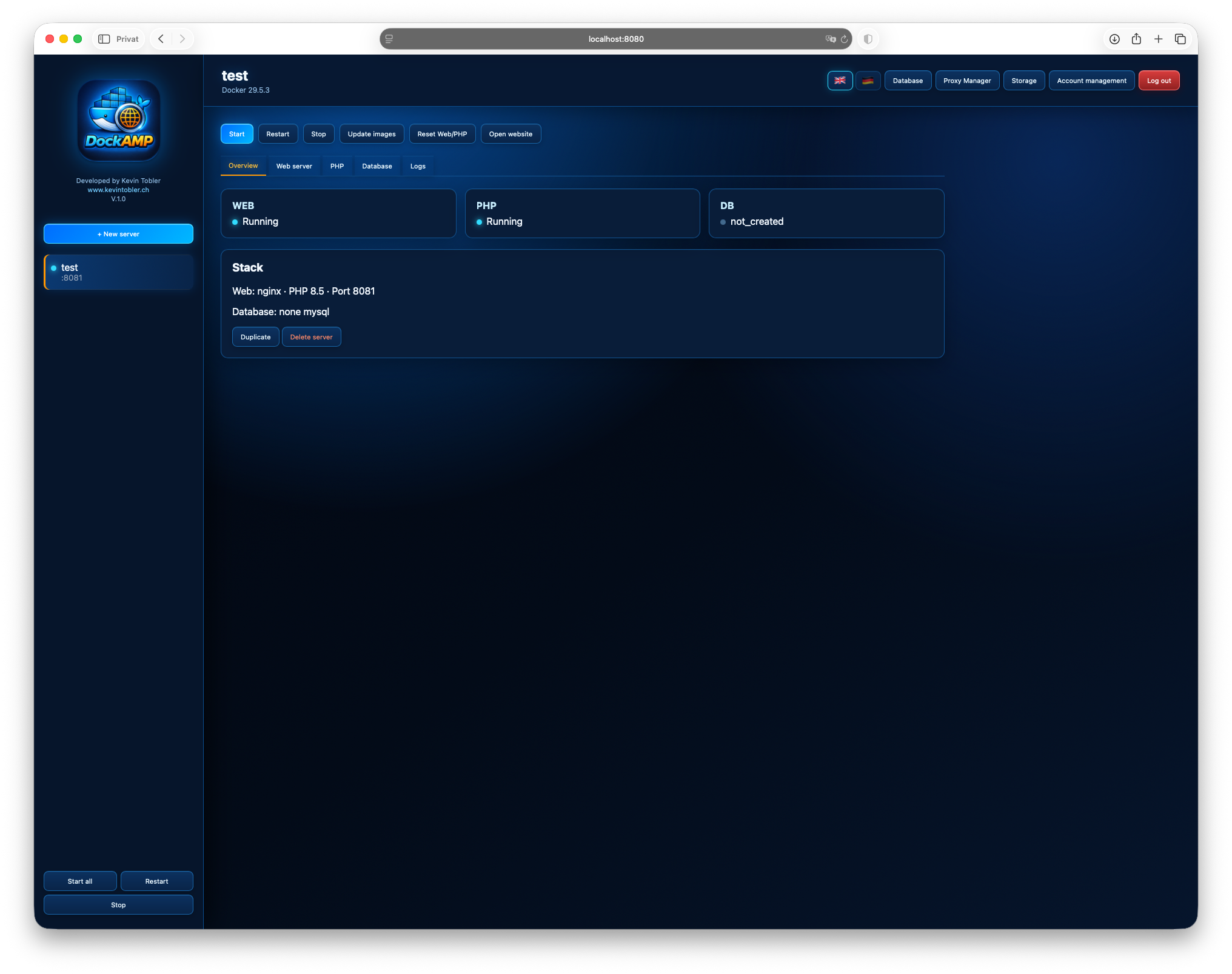
📸 Screenshots Docker version
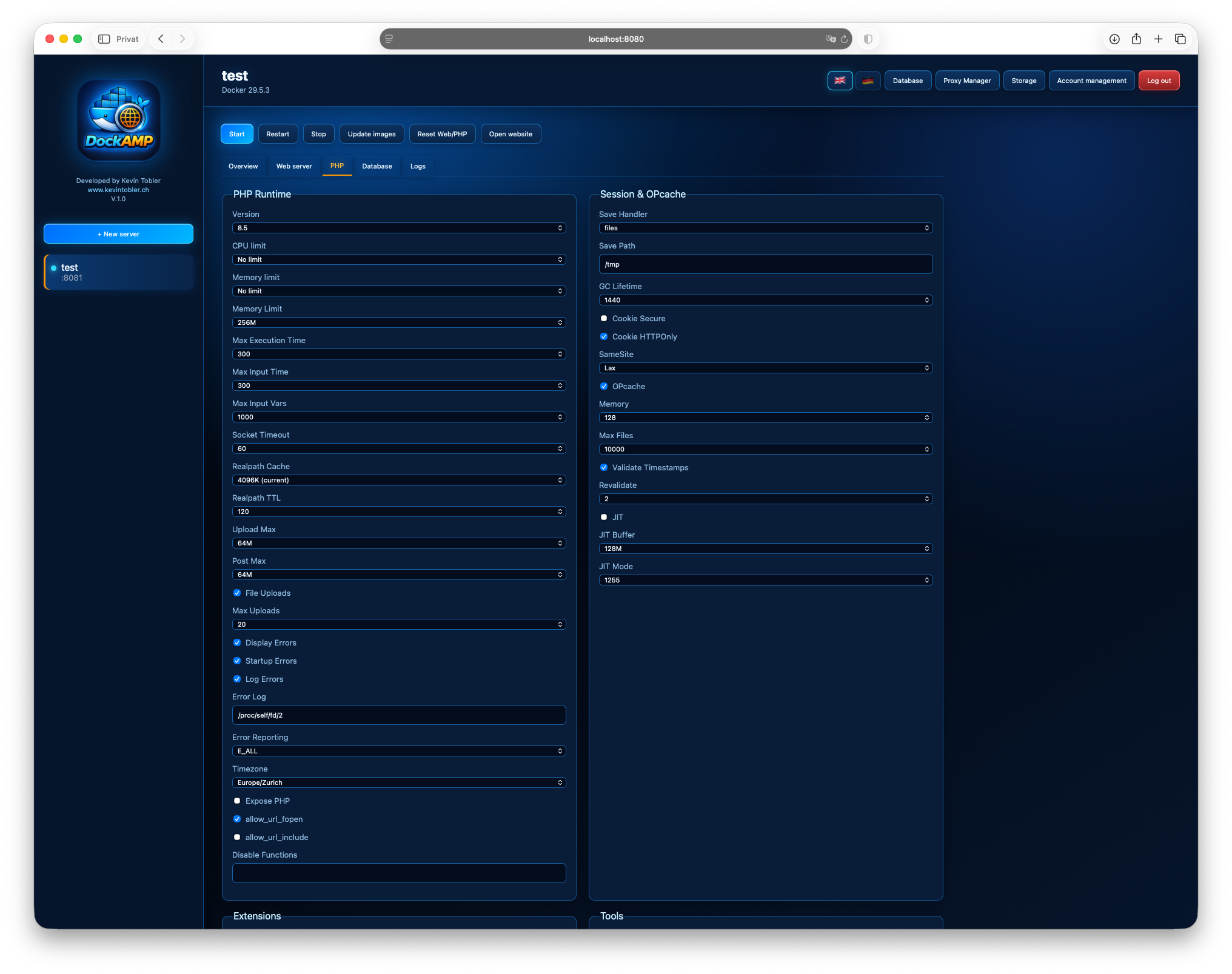
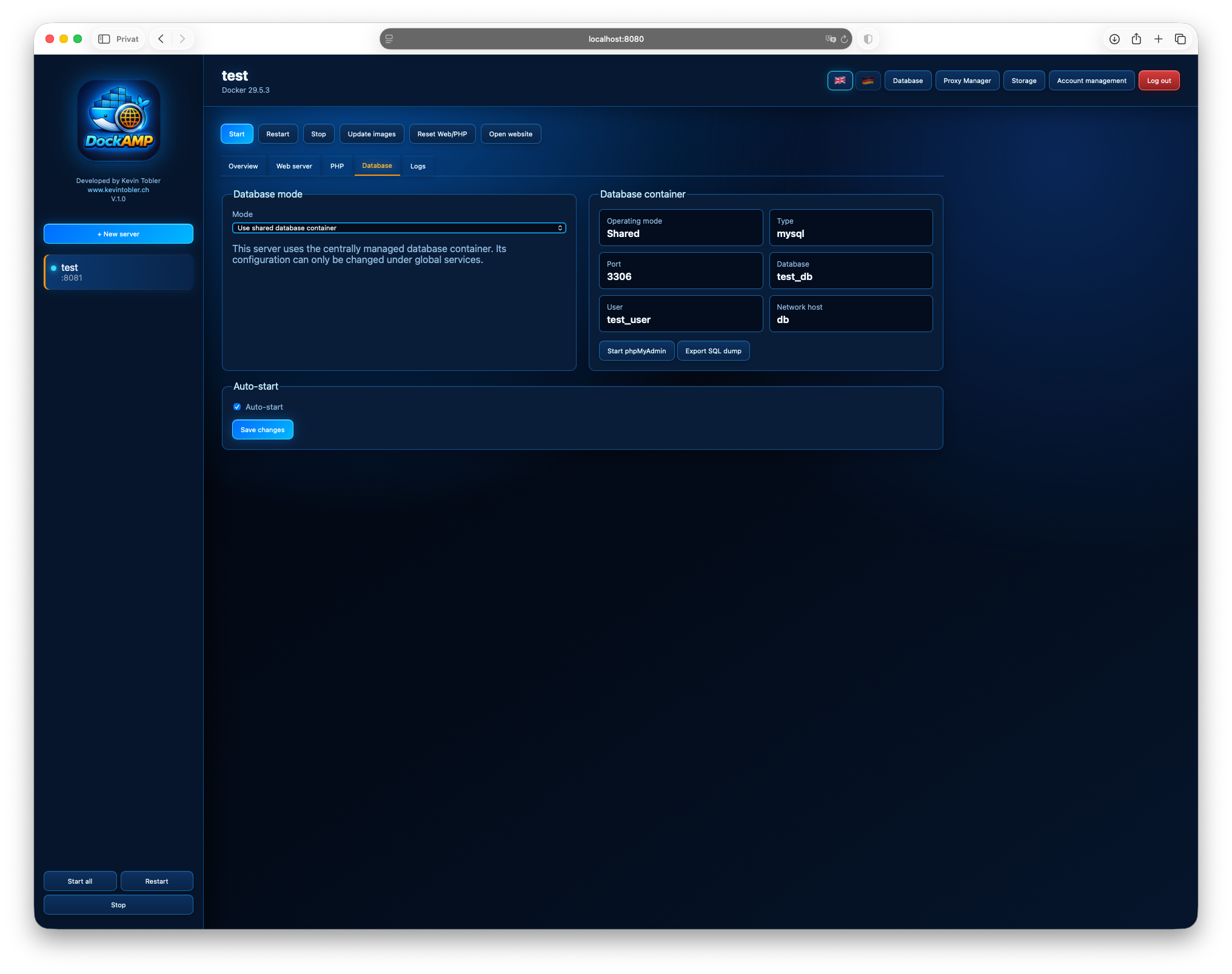
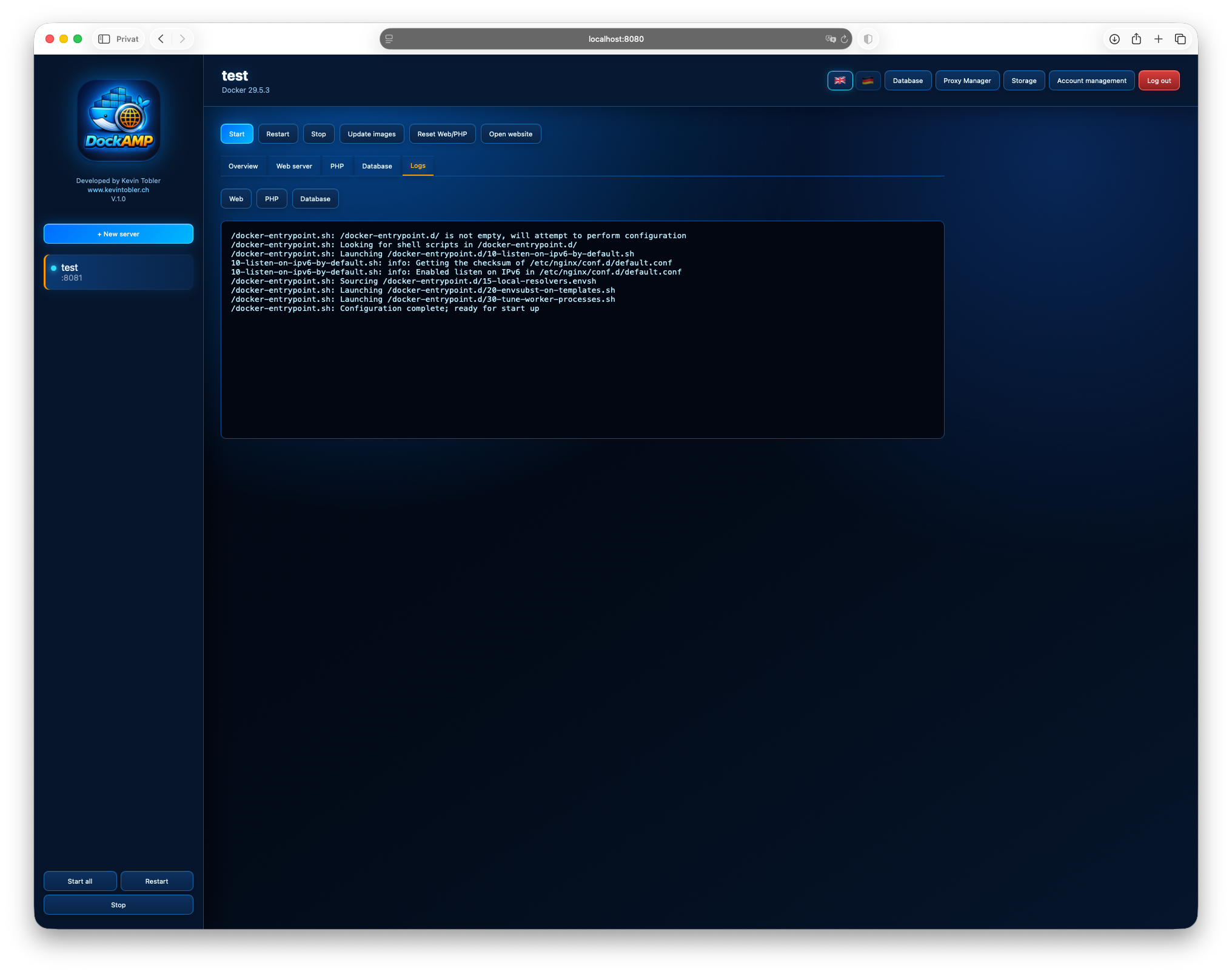
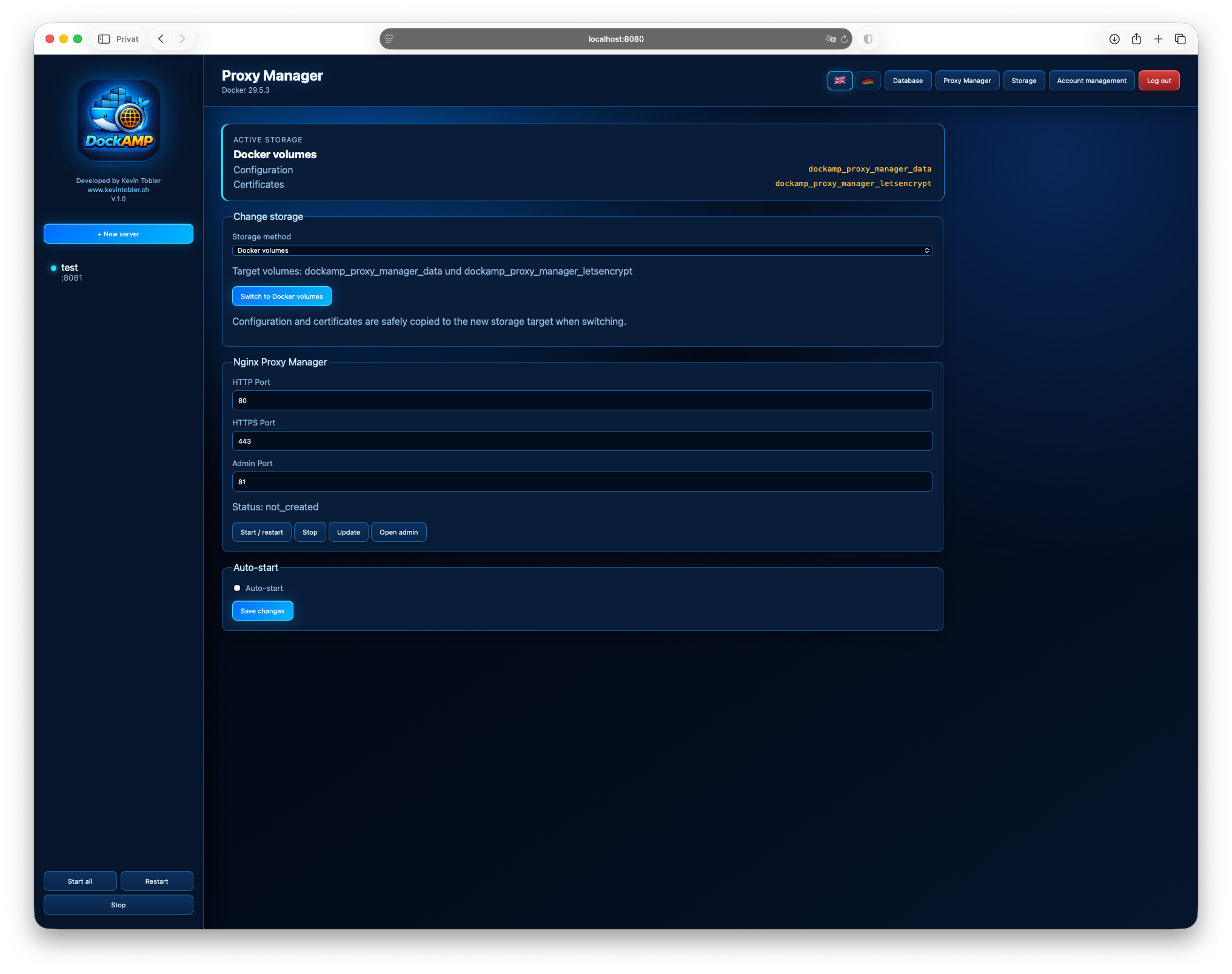
🧑💻 Developer
Kevin Tobler
🌐 www.kevintobler.ch
Tag summary
Content type
Image
Digest
sha256:f8cdfa3ae…
Size
26.4 MB
Last updated
2 days ago
docker pull keepcoolch/dockamp