elestio/uptime-kuma
Uptime-kuma, verified and packaged by Elestio
500K+
elestio/uptime-kuma repository overview



Uptime-Kuma, verified and packaged by Elestio
uptime-kuma is an open source monitoring tool. It enables you to monitor services over HTTP/S, TCP, DNS, and other protocols.
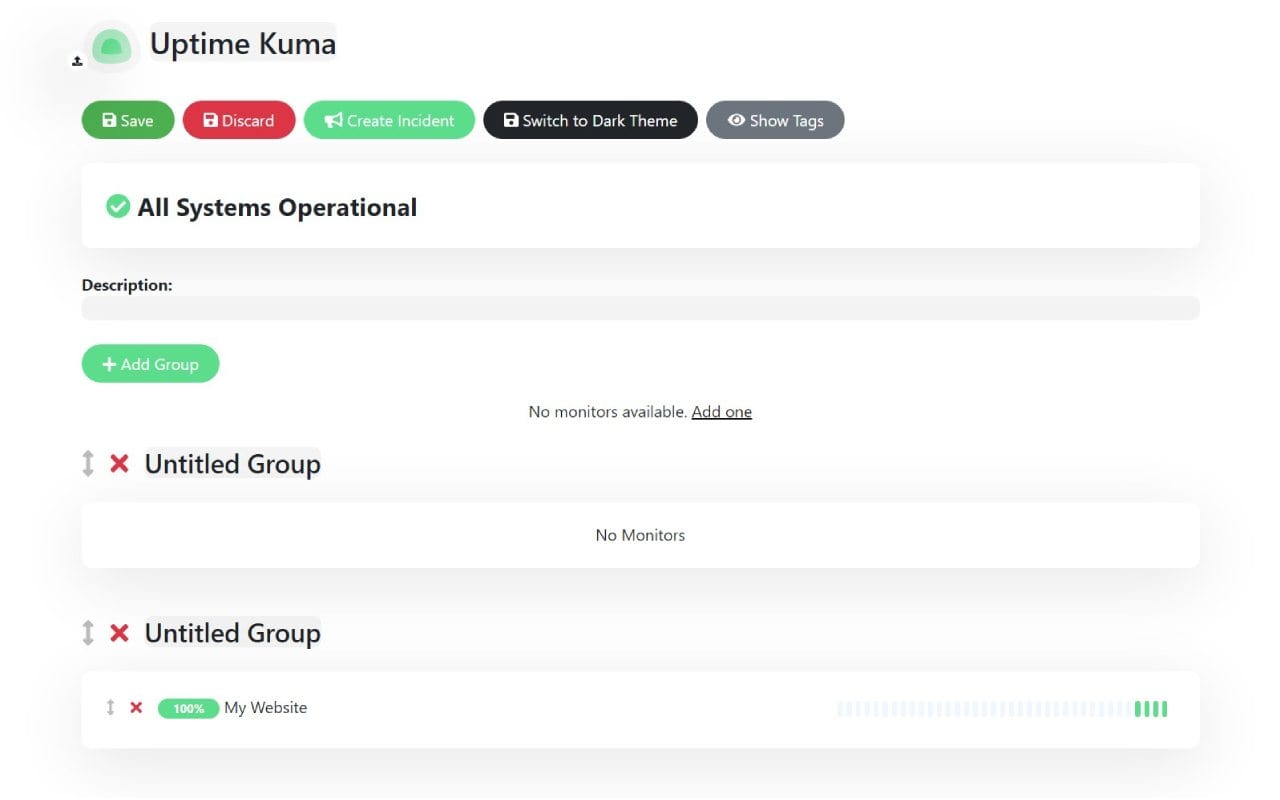
Deploy a fully managed uptime-kuma on elest.io if you want a great solution that allows the creation of simple and easy-to-use monitoring dashboards to monitor the status of servers, applications, and services.

Why use Elestio images?
- Elestio stays in sync with updates from the original source and quickly releases new versions of this image through our automated processes.
- Elestio images provide timely access to the most recent bug fixes and features.
- Our team performs quality control checks to ensure the products we release meet our high standards.
Usage
Docker-compose
Here are some example snippets to help you get started creating a container.
version: '3.3'

services:
uptime-kuma:
    image: elestio/uptime-kuma:${SOFTWARE_VERSION_TAG}
    restart: always
    healthcheck:
    disable: true
    volumes:
    - ./data:/app/data
    ports:
    - '172.17.0.1:13001:3001'
Environment variables
| Variable | Value (example) |
|---|---|
| ADMIN_EMAIL | [email protected] |
| ADMIN_PASSWORD | your-password |
| SOFTWARE_VERSION_TAG | latest |
Access
You can access the Web UI at: http://your-domain:13001
Maintenance
Logging
The Elestio uptime-kuma Docker image sends the container logs to stdout. To view the logs, you can use the following command:
docker-compose logs -f
To stop the stack you can use the following command:
docker-compose down
Backup and Restore with Docker Compose
To make backup and restore operations easier, we are using folder volume mounts. You can simply stop your stack with docker-compose down, then backup all the files and subfolders in the folder near the docker-compose.yml file.
Creating a ZIP Archive For example, if you want to create a ZIP archive, navigate to the folder where you have your docker-compose.yml file and use this command:
zip -r myarchive.zip .
Restoring from ZIP Archive To restore from a ZIP archive, unzip the archive into the original folder using the following command:
unzip myarchive.zip -d /path/to/original/folder
Starting Your Stack Once your backup is complete, you can start your stack again with the following command:
docker-compose up -d
That's it! With these simple steps, you can easily backup and restore your data volumes using Docker Compose.
Links
Tag summary
Content type
Image
Digest
sha256:06584fe5d…
Size
587.6 MB
Last updated
1 day ago
docker pull elestio/uptime-kuma:2.4.0This week's pulls
Pulls:
9,779
Last week